Home/Products/Table Eggs (Chicken)
Back to Products
Table Eggs (Chicken) preview 1
India is the second-largest egg producer in the world, with annual production exceeding 142–149 billion eggs as of 2023–2025. Primarily producing white and brown chicken eggs, the Indian poultry sector has experienced rapid, consistent growth driven by increasing domestic consumption and demand.
Table Eggs

Table Eggs (Chicken)

Origin

White eggs are not exclusive to one country; they are produced globally, with major production in the United States, India, and various European nations

Season

In India, commercial white eggs are available year-round, but peak production often follows cooler months, as high summer temperatures cause heat stress in hens, leading to thinner shells.

Sourced from Maharashtra, Andhra Pradesh, Namakkal-Tamil Nadu, Telangana, Karnataka states in Indian, also we have registered partners in the globe such as in Turkey, Ukraine & Netherlands to supply Table Eggs to our Corporate client under our supervision & Quality Parameters.

Why Indian?

Network-based approach with negotiated preferential pricing direct with farms and international partners

Request Quote

Benefits

Global reach spanning three continents, efficient and cost-effective order fulfillment, best quality & price with corporate customer service

Uses & Applications

White eggs are not exclusive to one country; they are produced globally, with major production in the United States, India, and various European nations

Characteristics

Texture:White eggs in India, typically sourced from commercial poultry farms, are characterized by a smooth, matte-to-slightly-glossy white shell. These eggs generally have a thinner, more fragile, and uniform shell compared to the thicker, more rugged texture of brown desi (country) eggs
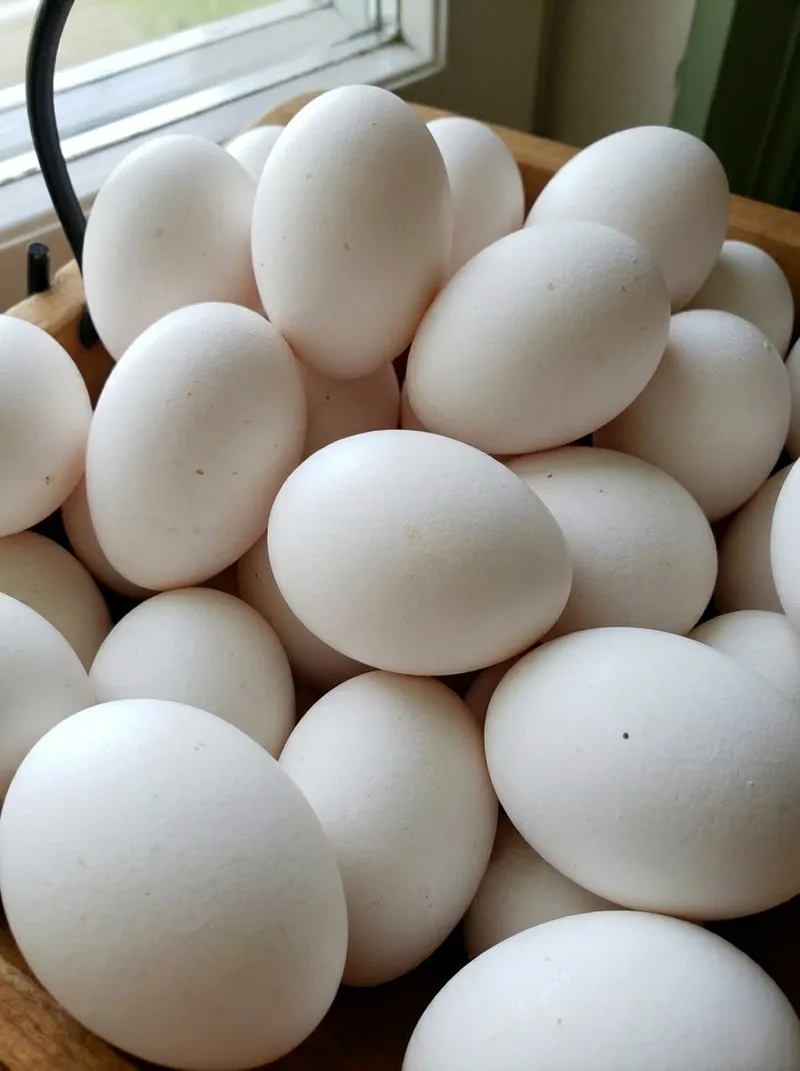
Appearance:White eggs in India, typically produced by white-feathered, white-earlobed chickens like White Leghorns, have a distinct appearance characterized by a clean, smooth, pale cream or white shell. They are generally uniform in their oval shape, widely available, and often sold in standard, commercial packaging.

Health & Nutrition

Nutritional Value

A single, large Indian white egg white (approx. 33g) provides a high-protein, low-calorie, and fat-free source of nutrition, containing about 15-20 calories and 3.6-4g of protein. It is rich in selenium, calcium, magnesium, and potassium, while containing 0g of cholesterol, making it ideal for muscle building and weight management

Medicinal Properties

White Indian egg whites (albumen) are a potent, low-calorie (17 kcal) source of pure protein ( ) and essential amino acids, crucial for muscle repair, growth, and satiety. They are fat-free and cholesterol-free, making them ideal for heart health and weight management. Additionally, they support immunity, provide nutrients like selenium, and are used for skin care

Cultural Significance

White eggs in India, while often viewed simply as a common commercial food item compared to "desi" (country/brown) eggs, hold a complex, evolving place in culture and nutrition, driven by affordability, modern dietary habits, and, sometimes, misconceptions.

Specifications

Weight40 to 60 gm

Packaging

White Indian egg exports utilize, on average, 50-55 gram fresh white-shelled chicken eggs packed in paper pulp trays (30 eggs/tray). Twelve trays are packed into a 5-ply export-worthy carton (360 eggs/carton). Standard 40ft high-cube reefer containers hold 1312 cartons (472,320 eggs). Capacity: 30-tray paper pulp molds. Carton: 5-ply cardboard, 360 eggs per carton (12 trays). Container: 40ft High Cube Reefers (1312 cartons or 472,320 eggs). Weight Class: 50-55 grams (common) or 40g (bullet). Shelf Life: Approximately 3-5 weeks (refrigerated). Export Markets: Major destinations include the Middle East (Qatar, Oman), and African nations.

Safety Information

Eggs sold in India, including common white farm eggs (White Leghorn), are generally safe, nutritious, and regulated by FSSAI (Food Safety and Standards Authority of India). However, to ensure safety from Salmonella and other risks, it is essential to follow specific handling and cooking practices

Trust & Quality

100% Authentic
Premium Quality
Global Export
Natural Source

Product Specifications

General Specifications

MaturityThe maturity and production cycle of white egg-laying hens in India, particularly commercial White Leghorn strains, are characterized by early maturity and high-efficiency, with significant egg production beginning around 18-20 weeks of age.
Storage TemperatureWhite Indian table eggs are exported in 40ft high-cube reefer containers, typically holding 1,312 cartons (472,320 eggs) at temperatures between 0°C and 5°C. Standard packaging includes 30-egg paper pulp trays (12 trays per 5-ply carton). Common export destinations include Oman, Qatar, UAE, and Africa.
Size.
Country of Originindia

Packaging Details

MaterialWhite Indian egg export, primarily from Tamil Nadu (Namakkal) and other poultry hubs, relies on specialized, high-density, and protective packaging to survive long-distance shipping to markets in the Middle East, Africa, and Southeast Asia.
Box SizesWhite Indian egg packing boxes come in various sizes primarily for 6, 10, 12, and 24-25 eggs, commonly made of white paper pulp or plastic. Common dimensions include (10 eggs), (10 eggs), (6 eggs), and (24 eggs)
Pack SizesWhite Indian eggs (50-60g average, 5-6cm) are commonly packed in 30-egg pulp trays (1x30), with standard, wholesale, and export cartons containing 12 trays (360 eggs total). Smaller retail options include 6, 12, or 25-egg cartons. They are classified into sizes including Small, Medium, Large, and Extra Large (45g-70g)

Shipping Information

40ft Container LoadabilityIndian white eggs, primarily sourced from BV 300 White Leghorn chickens in regions like Namakkal, Tamil Nadu, are exported in high volumes using refrigerated containers (reefers). The standard loadability for Indian white eggs is highly standardized for international transport. Standard Container Loadability (40ft High Cube Reefer) Total Cartons: 1,312 cartons Total Eggs: 472,320 eggs Packing Structure: 30 eggs per tray, 12 trays per carton (360 eggs per carton) Weight per Carton: Approximately 18 kg to 18.5 kg 20ft Container Loadability Total Cartons: 656 cartons Total Eggs: 236,160 eggs Key Logistics & Quality Specifications Temperature: Maintained at 0–2°C to 5°C throughout transit Weight Class: Typically 50–55 grams, 45-60 grams Shelf Life: Approximately 30-45 days under optimal refrigeration Supply Ability: Major exporters can supply 10–15 containers per week Port of Loading: Primarily Chennai, Tuticorin, or JNPT Mumbai

Availability & Processing

Supply Abilityas per buyer details