Cluster Beans (Guar Beans)
Across India
grown during summer (March) and the monsoon season (June–July). They require temperatures between for optimal growth and are typically harvested 30 to 100 days after sowing, depending on the variety.
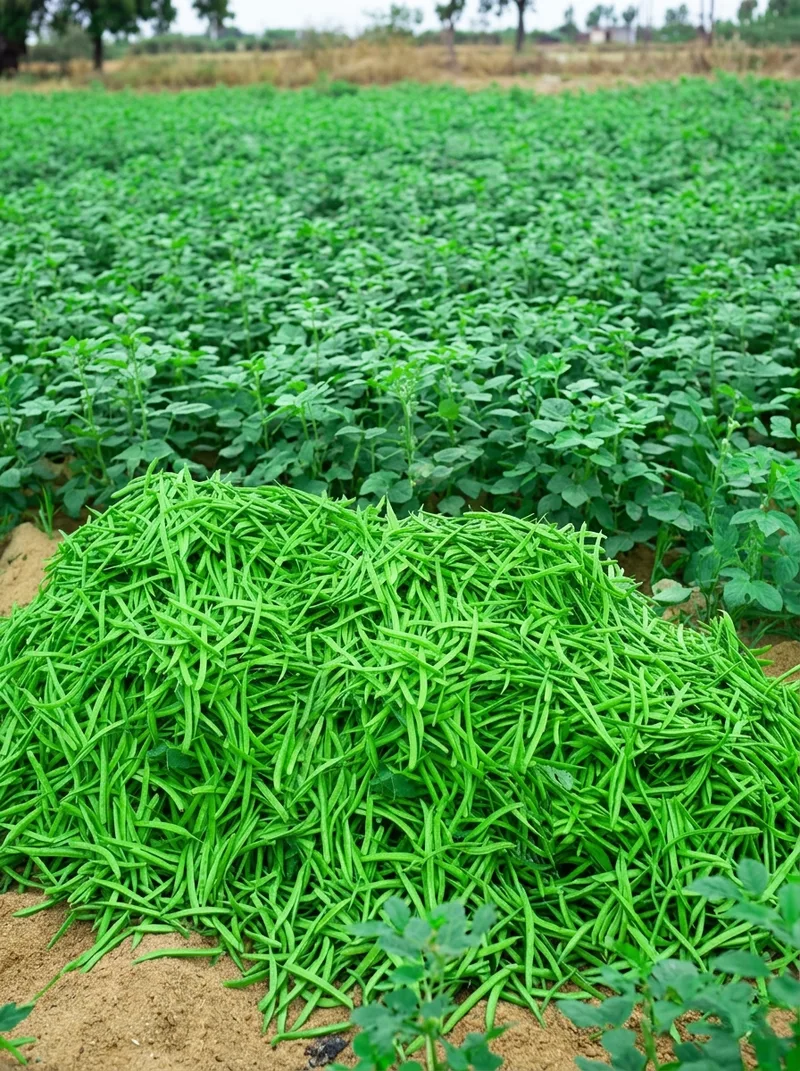
Sourced from across India, Guar or Cluster Beans is an annual legume and the source of guar gum. Cluster beans, commonly known as guar or gawar (Cyamopsis tetragonoloba), are small, green, and slightly slimy pods that grow in clusters on a drought-resistant legume plant. Native to Asia, they are a staple, high-fiber, low-calorie vegetable in Indian cuisine (often used in curries) and the source of guar gum, a natural food thickener.
Why Indian?
Very rich in dietary fiber
Benefits
Heart health benefits, helps in maintaining digestive system, contains Vitamin C that makes bones and teeth stronger
Uses & Applications
Cluster beans (gawar/guar) are highly nutritious legumes rich in fiber, potassium, and vitamins K and C, commonly used in Indian cuisine for stir-fries, curries, and soups. They help manage diabetes, lower cholesterol, improve bone health, and aid digestion. Additionally, they are processed into guar gum for industrial, food, and pharmaceutical applications
Characteristics
Health & Nutrition
Nutritional Value
Cluster beans (guar phali) are a highly nutritious, low-calorie vegetable (approx. 30–35 kcal per 100g) rich in fiber, vitamins, and minerals. They are particularly notable for high calcium (130–200mg), significant potassium (260mg), and iron (1–5mg), aiding in digestion and heart health.
Medicinal Properties
Cluster beans (guar) are a highly nutritious, low-calorie, and fiber-rich vegetable known for managing diabetes, reducing LDL cholesterol, improving heart health (via potassium), and boosting bone health (via calcium/phosphorus). They are packed with vitamins A, C, and K, aiding digestion and supporting pregnancy
Specifications
Packaging
Cluster beans (guar) are commonly packaged in perforated plastic bags, Polypropylene (PP) bags, or gunny bags for fresh distribution to maintain ventilation and prevent moisture buildup. For retail, 500g pouches are used, while wholesale uses 5kg, 10kg, or 50kg bags. Moisture-proof packaging is prioritized for long-distance transport.
Safety Information
Cluster beans (Gavar or Guar) are a nutritious, high-fiber, and low-calorie vegetable. While generally safe and healthy, there are important safety notes, precautions, and side effects to consider, particularly regarding digestion and raw consumption.
Additional Information
Source of guar gum
Trust & Quality
Related Products
Green Chilli
📍 All over India
Green Chilli is another staple of Indian culinary gamut. After grasses, chilli peppers are perhaps the most diversified organic item with many varieties.
Lemon
📍 India
Indian Limes for export Indian lime (citrus) for export, primarily Citrus aurantifolia, is recognized for being 100% fresh, organic, and rich in Vitamin C, with a vibrant green color. Sourced largely from regions like Tamil Nadu, these limes are handpicked, washed, and packed using refrigerated, climate-controlled logistics for international markets like the UAE, UK, and Bangladesh
Okra (Lady's Fingers)
📍 Tropical and warm regions of India
Sourced from the tropical and warm regions of Indian, Okra is a perennial vegetable of immense popularity in India. Its fibrous roots and pods containing round white seeds transform into thick glutinous slime when cooked. India is the world's largest producer of okra (bhindi/ladyfinger), contributing over 60-70% of global production. In 2023, India's production was 7.158 million metric tons. India is also a leading global exporter of fresh okra, with significant shipments to the UK, Kuwait, and Germany etc