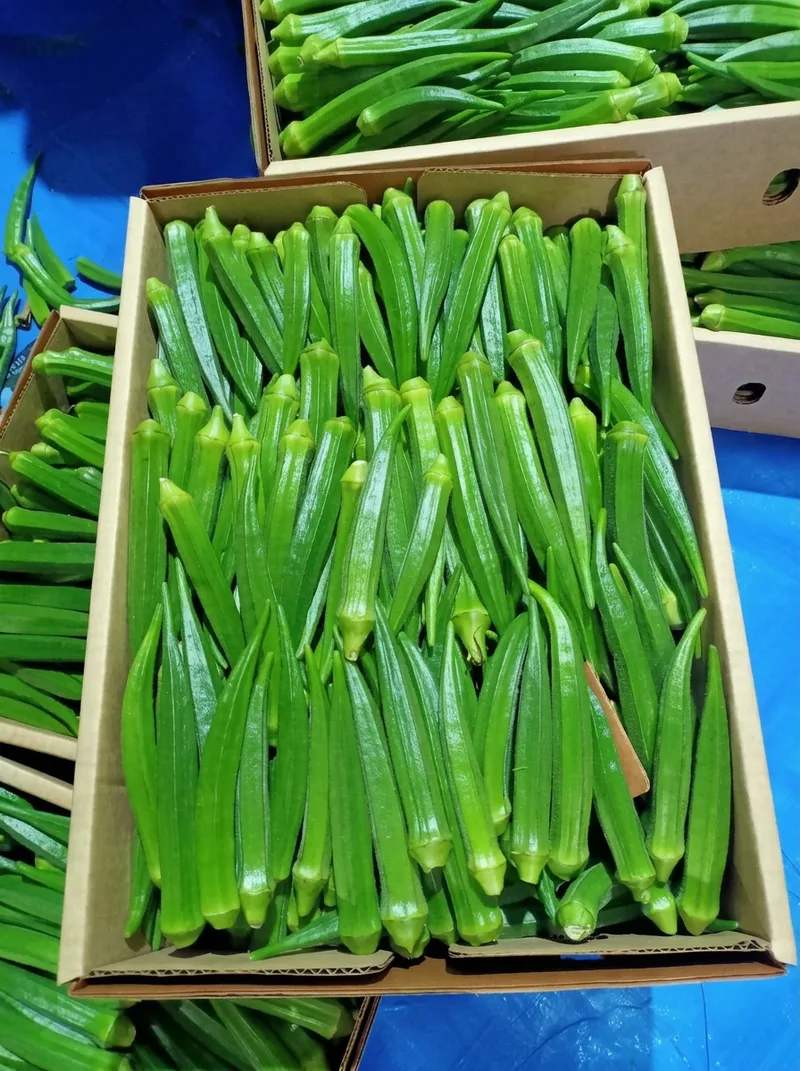
Okra (Lady's Fingers)
Tropical and warm regions of India
Okra (Bhindi) in India has two main cultivation seasons: the summer crop (sown Feb–March) and the rainy/Kharif crop (sown June–July).
Sourced from the tropical and warm regions of Indian, Okra is a perennial vegetable of immense popularity in India. Its fibrous roots and pods containing round white seeds transform into thick glutinous slime when cooked. India is the world's largest producer of okra (bhindi/ladyfinger), contributing over 60-70% of global production. In 2023, India's production was 7.158 million metric tons. India is also a leading global exporter of fresh okra, with significant shipments to the UK, Kuwait, and Germany etc
Why Indian?
Perennial vegetable of immense popularity in India
Benefits
Prevents malnutrition, serves as number one choice for alleviating food security in developing countries
Uses & Applications
Indian okra, known as bhindi (Hindi) or lady’s finger, is a staple vegetable in Indian cuisine, prized for its versatile texture and ability to absorb spices. It is used in a wide variety of dry, gravy, and crispy preparations, primarily served with roti, paratha, or rice.
Characteristics
Health & Nutrition
Nutritional Value
Indian okra (Bhindi) is a highly nutritious, low-calorie, and fiber-rich vegetable. A 100g serving of raw okra provides roughly 33 calories, 2g protein, 7g carbohydrates, and 3g of fiber. It is packed with vitamins C and K1, as well as minerals like magnesium, folate, and calcium, supporting immune function, heart health, and blood sugar management.
Medicinal Properties
Indian okra (Bhindi) is a nutrient-dense, low-calorie vegetable with particularly for managing diabetes, aiding digestion, and supporting heart health. Rich in soluble fiber, vitamins A, C, and K, and antioxidants, it regulates blood sugar, lowers cholesterol, boosts immunity, and promotes skin health.
Varieties
Okra (Bhindi) varieties in India are primarily classified by color and resistance to Yellow Vein Mosaic Virus (YVMV), with popular options including Arka Anamika, Pusa Sawani, Parbhani Kranti, and Punjab Padmini
Specifications
Packaging
Indian okra (Bhindi/Ladyfinger) is commonly packed for export and domestic distribution in ventilated corrugated fiberboard boxes (5kg to 10kg) to maintain freshness. For retail, they are packed in net bags or clamshells, while wholesale often uses 5kg-25kg polypropylene (PP) bags. Exported okra is often stored at 7 to 10deg in cold storage.
Safety Information
Freshness Check: Choose firm, bright green pods that are 2-4 inches long. Avoid Spoiled Pods: Do not purchase pods that are limp, woody, or have brown, bruised, or black spots.
Trust & Quality
Related Products
Green Chilli
📍 All over India
Green Chilli is another staple of Indian culinary gamut. After grasses, chilli peppers are perhaps the most diversified organic item with many varieties.
Lemon
📍 India
Indian Limes for export Indian lime (citrus) for export, primarily Citrus aurantifolia, is recognized for being 100% fresh, organic, and rich in Vitamin C, with a vibrant green color. Sourced largely from regions like Tamil Nadu, these limes are handpicked, washed, and packed using refrigerated, climate-controlled logistics for international markets like the UAE, UK, and Bangladesh
French Beans (Faras Beans)
📍 Across India
Sourced from across India, Faras or Green beans can be sold fresh. They can be consumed in a variety of ways; raw or steamed, boiled, stir-fried, or baked.