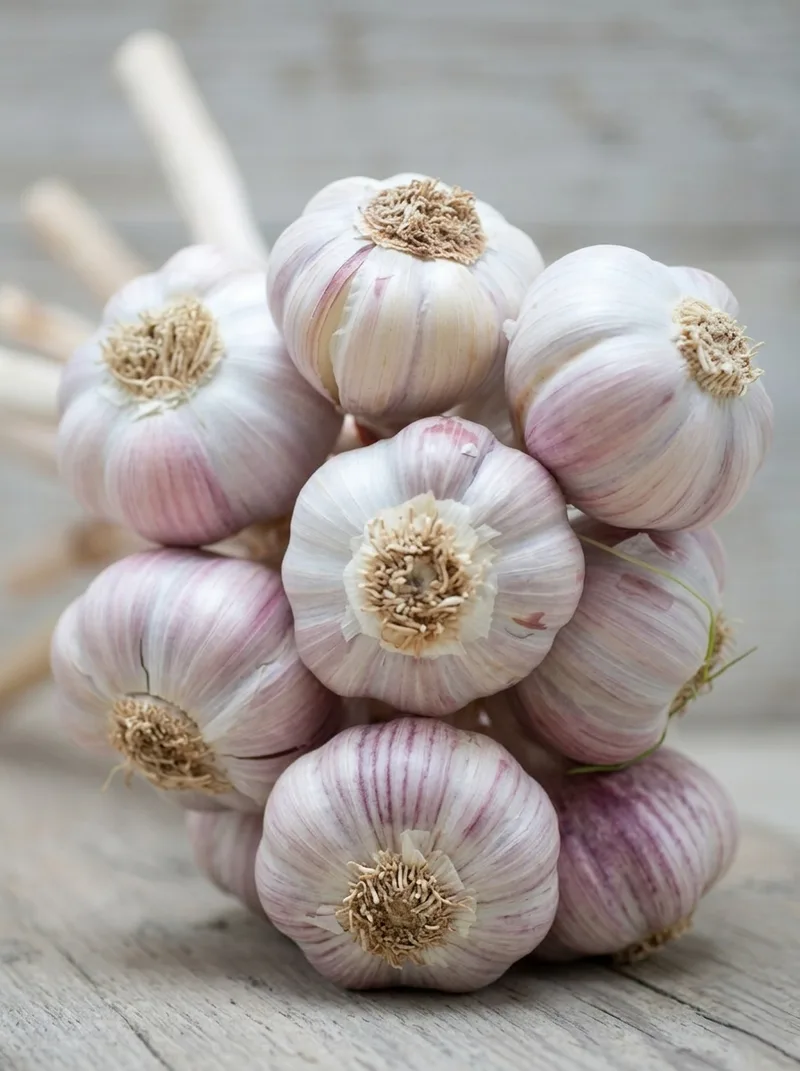
Garlic
Across India
Garlic is typically planted in the fall (September–November) to take advantage of cooler weather for root development and harvested in the following summer (June–July). It has a long growing cycle of 9–10 months, with peak planting times varying by region, such as August–November in southern India and September–November in northern India
Sourced from across India in wide variety and number, the inseparable bond of Garlic in paste form is elemental in defining the culinary ardor of India.
Why Indian?
Elemental in defining the culinary ardor of India
Benefits
Essential culinary ingredient, available in multiple forms, hygienic packaging
Uses & Applications
Garlic is a versatile, nutrient-dense ingredient used globally for its pungent flavor in cooking and potent medicinal properties. It supports heart health by lowering blood pressure and cholesterol, acts as a natural antibiotic and anti-inflammatory, boosts immunity, and aids in detoxifying the body.
Characteristics
Health & Nutrition
Nutritional Value
Garlic is a highly nutritious, low-calorie bulb packed with sulfur compounds (notably allicin), manganese, vitamin B6, vitamin C, and selenium. A single clove provides only 4-5 calories, making it a nutrient-dense addition that supports immune function, heart health (lower blood pressure/cholesterol), and provides antioxidant benefits
Medicinal Properties
Garlic (Allium sativum) is a powerful, nutrient-dense herb used for thousands of years to treat conditions like high blood pressure, high cholesterol, and infections. Rich in the compound allicin, it provides anti-inflammatory, antioxidant, and immune-boosting benefits.
Varieties
Garlic mainly falls into two categories—hardneck and softneck distinguished by their stem hardness, flavor intensity, and climate adaptability. Hardnecks thrive in cold climates with robust flavors, while softnecks are better for warmer, milder climates and long-term storage. Elephant garlic is a third, milder, larger-cloved type related to leeks.
Specifications
Packaging
Whole Garlic packaged as per buyer's requirements, Garlic Paste can be bottled, tinned or packed in sachets under stringent hygienic conditions
Safety Information
Garlic is generally safe in culinary amounts but can cause side effects like heartburn, bad breath, gas, and dizziness when consumed in excess.
Additional Information
Dehydrated Garlic: Significant demand exists for garlic flakes, powder, and granules, often sourced from India as a cheaper alternative (40% less) to Chinese counterparts. Other Forms: Garlic paste,frozen products, and medicinal preparations (garlic pearls)
Trust & Quality
Related Products
Green Chilli
📍 All over India
Green Chilli is another staple of Indian culinary gamut. After grasses, chilli peppers are perhaps the most diversified organic item with many varieties.
Lemon
📍 India
Indian Limes for export Indian lime (citrus) for export, primarily Citrus aurantifolia, is recognized for being 100% fresh, organic, and rich in Vitamin C, with a vibrant green color. Sourced largely from regions like Tamil Nadu, these limes are handpicked, washed, and packed using refrigerated, climate-controlled logistics for international markets like the UAE, UK, and Bangladesh
Okra (Lady's Fingers)
📍 Tropical and warm regions of India
Sourced from the tropical and warm regions of Indian, Okra is a perennial vegetable of immense popularity in India. Its fibrous roots and pods containing round white seeds transform into thick glutinous slime when cooked. India is the world's largest producer of okra (bhindi/ladyfinger), contributing over 60-70% of global production. In 2023, India's production was 7.158 million metric tons. India is also a leading global exporter of fresh okra, with significant shipments to the UK, Kuwait, and Germany etc