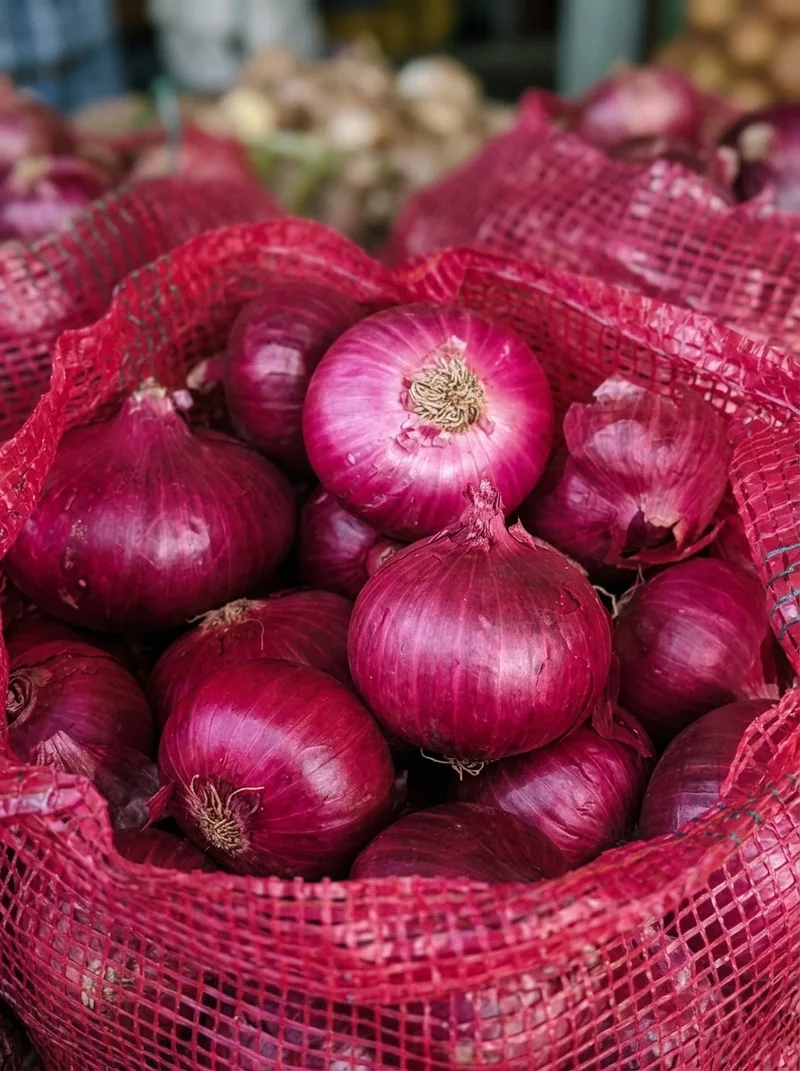
Fresh Onion
Maharashtra (primarily)
Onion season in India runs year-round across three main cultivation cycles—Rabi, Kharif, and Late Kharif—with peak harvesting occurring between March and June. Rabi (winter) crops, providing 60-70% of supply, are harvested from March to May/June, while Kharif (monsoon) and Late Kharif crops hit markets from September to February to meet demand
India is the second largest onion growing country in the world. Maharashtra ranks first in Onion production, maximum sourced onion production takes place in Maharashtra.
Why Indian?
Second largest producer globally, Maharashtra leads production
Benefits
Staple food ingredient, versatile usage
Uses & Applications
In India, onions used daily as a flavor base for curries, gravies, sabzi, and biryanis, as well as raw in salads, chutneys, and pakoras. Beyond cooking, they offer health benefits like improving digestion, boosting immunity, and aiding heart health.
Characteristics
Health & Nutrition
Medicinal Properties
Indian onions (both red and desi) are highly valued in Ayurveda and traditional medicine for their rich sulfur, quercetin, and antioxidant content. They are primarily used to manage colds, flu, and asthma (acting as an expectorant), regulate blood sugar, lower cholesterol, boost immunity, and promote hair growth.
Specifications
Packaging
Indian onion export packaging focuses on ventilation and durability, primarily using 5kg, 10kg, 20kg, 25kg, and 50kg mesh or breathable jute bags. Premium, long-distance shipments may use specialized corrugated fiberboard boxes (10kg-20kg). Proper packaging minimizes spoilage, supports, and ensures compliance with international standards for weight and quality.
Safety Information
Exporting onions from India requires strict adherence to quality and safety standards to meet international regulations, including obtaining an IEC, APEDA registration, and a Mandatory Phytosanitary Certificate. Onions must be sorted, graded (typically 40–70mm or 60–90mm), free from pests, soil, and decay, and packed in ventilated mesh or jute bags
Trust & Quality
Related Products
Green Chilli
📍 All over India
Green Chilli is another staple of Indian culinary gamut. After grasses, chilli peppers are perhaps the most diversified organic item with many varieties.
Lemon
📍 India
Indian Limes for export Indian lime (citrus) for export, primarily Citrus aurantifolia, is recognized for being 100% fresh, organic, and rich in Vitamin C, with a vibrant green color. Sourced largely from regions like Tamil Nadu, these limes are handpicked, washed, and packed using refrigerated, climate-controlled logistics for international markets like the UAE, UK, and Bangladesh
Okra (Lady's Fingers)
📍 Tropical and warm regions of India
Sourced from the tropical and warm regions of Indian, Okra is a perennial vegetable of immense popularity in India. Its fibrous roots and pods containing round white seeds transform into thick glutinous slime when cooked. India is the world's largest producer of okra (bhindi/ladyfinger), contributing over 60-70% of global production. In 2023, India's production was 7.158 million metric tons. India is also a leading global exporter of fresh okra, with significant shipments to the UK, Kuwait, and Germany etc