Home/Products/Potato
Back to Products
Potato preview 1
India is a significant, yet top-15, global potato exporter, ranking approximately 12th in 2024 with exports valued at around $121M, OEC.world. While often cited in earlier data as a major producer (2nd largest), in terms of export value and volume, it follows behind major European exporters like the Netherlands (20% share), France, and Germany. Key export destinations include Nepal, Oman, Bangladesh, and Indonesia
Vegetables

Potato

Origin

Across India

Sourced from across India in a diverse variety of shapes, sizes and tastes; Potatoes are virtually added with any other edible item to provide an instantaneous taste shift.

Why Indian?

Diverse variety of shapes, sizes and tastes reflecting geographical diversity

Request Quote

Benefits

Versatile ingredient, can be added with any edible item for taste enhancement

Uses & Applications

Indian potato exports, primarily sourcing from Uttar Pradesh, Gujarat, and West Bengal, are mainly used for direct table consumption, processing into snacks (chips, frozen fries), and as food ingredients in over 30 countries. Key destinations include Nepal, Malaysia, Sri Lanka, UAE, and Bangladesh, with exports comprising fresh potatoes and processed products like flakes and pellets

Characteristics

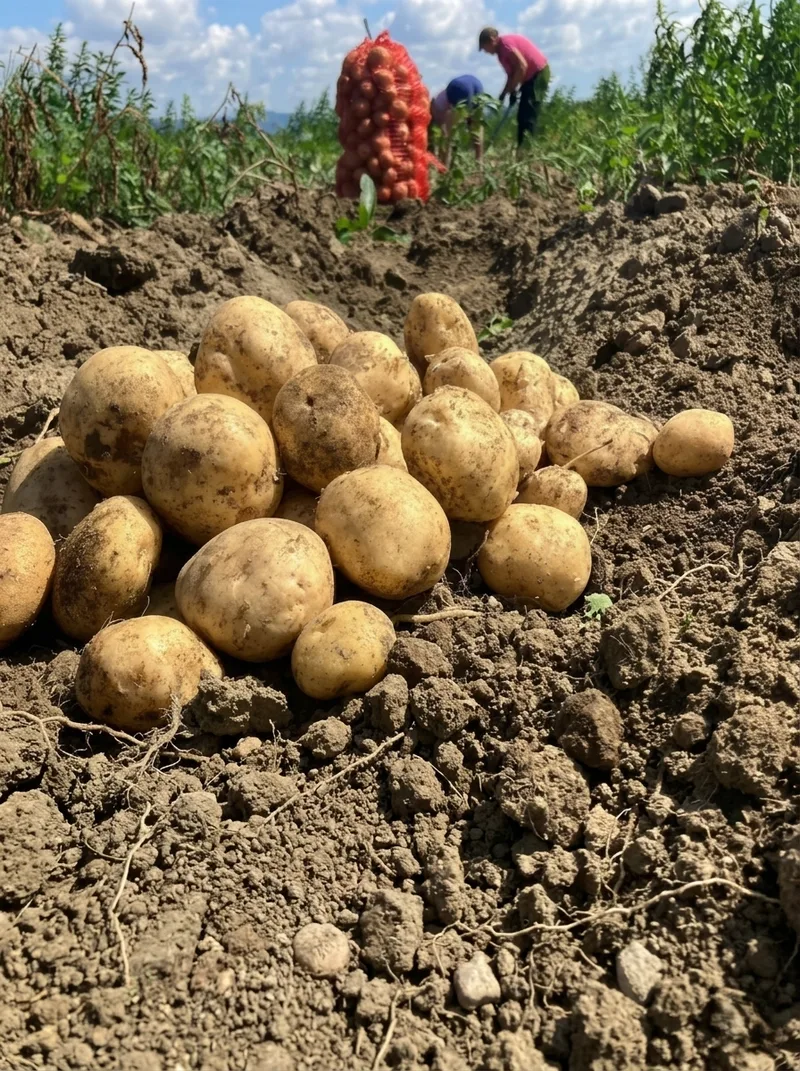
Texture:Indian potatoes for export are primarily characterized by a firm, waxy to semi-firm texture, featuring smooth skin and bright, light brown to golden-yellow skin, making them ideal for cooking and processing. Key export varieties, such as Kufri Pukhraj and Kufri Jyoti, offer a tender texture after cooking, with low moisture for better transport stability
Appearance:Indian potatoes for export are typically characterized by a clean, smooth, and blemish-free skin, usually oval or round in shape with a light brown to golden-yellow skin color. Key quality requirements for export include a uniform size, firm texture, no sprouting, and minimal soil content. Major varieties include Kufri Jyoti and Kufri Chipsona, known for good skin appearance, texture, and shelf life
Flavor:Indian potato exports feature diverse varieties tailored for specific culinary and processing needs, ranging from mild, waxy types to high-sugar processing potatoes. Key export, or "flavours," include versatile table varieties like Kufri Jyoti and Pukhraj, alongside processing-specialized types such as Lady Rosetta, Chipsona, and Santana, catering to global demand for chips and fries.

Health & Nutrition

Nutritional Value

Based on data for raw Indian potatoes, 100g typically provides roughly 70–87 kcal, 17–20g of carbohydrates, 1.8–2.0g of protein, and negligible fat. They are high in moisture (approx. 79%) and contain essential potassium, Vitamin C, and fiber, especially when consumed with the skin.

Medicinal Properties

Indian potatoes (specifically varieties developed by the Central Potato Research Institute - CPRI) are considered highly nutritious, serving as a staple food that provides essential vitamins, minerals, and dietary fiber. They are particularly known for their high potassium content, which can be higher than that of a banana. Potato Nutrition Potato Nutrition +1 Below is the approximate medicinal and nutritional value per 100g of raw, edible, or boiled Indian potato (varieties like Kufri Pukhraj, Kufri Jyoti):

Cultural Significance

The potato, or aloo, is a deeply integrated, essential, and versatile staple in Indian cuisine and culture, despite its foreign origin introduced by Portuguese traders in the early 17th century. It has become a "chameleon" ingredient, ubiquitous across all social classes and regions, featuring prominently in dishes like samosas, aloo paratha, and curries

Varieties

Potatoes in India, dominated by Central Potato Research Institute (CPRI) "Kufri" varieties, are categorized by usage—table (cooking) and processing (chips/fries). Key types include the popular, versatile Kufri Jyoti, creamy Kufri Pukhraj, red-skinned Kufri Sindhuri, and processing-specialized Kufri Chipsona. These varieties offer high yields suited for different Indian climates.

Specifications

WeightIndian potatoes generally weigh between 50g and 300g per tuber, with an average, commonly used potato weighing roughly 100-200g. For sorting and trade purposes, they are often classified as small ( 140g), medium (141-280g), or large ( 280g). A typical kilogram contains about 6-10 medium-sized potatoes.
Length0
ThicknessIndian potato exports, which reached approximately 513,537 tonnes of fresh produce in 2024–25 (valued at $110 million), prioritize specific, consistent tuber sizes over thinness. Export-grade potatoes are generally classified by diameter, with a preference for >55mm size for premium markets.

Packaging

Indian potato packaging for export focuses on materials that offer high breathability, durability, and customization to ensure product freshness during long-distance transit. The most common packaging types include jute bags, polypropylene (PP) mesh/leno bags, and ventilated cartons

Safety Information

Indian potato safety involves careful selection, storage, and preparation to avoid natural toxins like solanine and potential chemical contamination from pesticides. Key safety measures include avoiding greened or heavily sprouted potatoes, storing them in cool, dark, ventilated areas (not the fridge), and washing them thoroughly.

Trust & Quality

100% Authentic
Premium Quality
Global Export
Natural Source

Product Specifications

General Specifications

ColorIndian potatoes primarily feature white, yellow, or red skin, with flesh colors ranging from white to deep yellow, and rarely, purple. Popular varieties include the golden-yellow skinned Kufri Pukhraj for general cooking, white-fleshed Kufri Sindhuri, and specialized purple-skinned Kufri Neelkanth.
MaturityIndian potatoes generally reach maturity within 75 to 120 days after planting, depending on the variety and region, typically harvested when the haulms turn yellow and dry. Early varieties (e.g., Kufri Chandramukhi) mature in 80–90 days, while main-season crops (e.g., Kufri Sindhuri) take 100–120 days
Storage TemperatureIn India, the optimal cold storage temperature for potatoes depends on their use: seed potatoes are stored at 2–4°C for long-term storage, while table and processing potatoes (chips/fries) should be kept at 8–12°C to prevent excessive sugar accumulation. High relative humidity (90-95%) and proper ventilation are essential

Grading & Sizing

Grade A+65plus
Grade A55plus
Grade B45plus
Grade C35plus

Packaging Details

MaterialIndian potato exports utilize breathable packaging to maintain quality, primarily employing jute bags, mesh bags (polypropylene), corrugated cardboard boxes, and jumbo bags (500-1000kg) for bulk transport. Standard sizes range from 5kg to 50kg, with packing designed to meet destination country standards, including ventilated materials that prevent moisture buildup.
Box SizesIndian potato exports typically use mesh (leno) bags, PP bags, or jute bags for packaging, with common export pack sizes ranging from 5 kg, 10 kg, 15 kg, 20 kg, 25 kg, to 50 kg. The most common packing sizes for international markets are 25 kg to 50 kg bags, with 25 kg mesh/PP bags being frequently used for efficient, ventilated transport
Pack TypesIndian potato exports consist primarily of fresh/chilled table potatoes (over 90% of total volume) and seed potatoes, with key varieties including Kufri Pukhraj, Kufri Jyoti, Kufri Bahar, and Chipsona for processing. Major destinations for these, often shipped in 25kg+ mesh/jute bags, include Nepal, Sri Lanka, Oman, and the UAE
Pack SizesIndian potato exports typically utilize mesh or jute bags, with common pack sizes ranging from 5 kg to 50 kg, tailored for international,, logistical, and retail needs. Standard export packaging includes 5, 10, 20, 25, 40, and 50 kg bags, often utilizing breathable mesh/jute materials for transit

Shipping Information

40ft Container LoadabilityIndian potato export loadability is generally high, with standard 20ft and 40ft refrigerated (reefer) containers commonly used to transport 13–14 metric tons and 26–28 metric tons, respectively. As a top global producer with over 59 million metric tons in 2023–24, India exports various varieties—including Kufri Pukhraj, Jyoti, and Chandramukhi—primarily to nations like Sri Lanka, UAE, and Malaysia.

Availability & Processing

Supply Abilityas per buyer details
Minimum Ordermin 10 tons
Supply10 working days