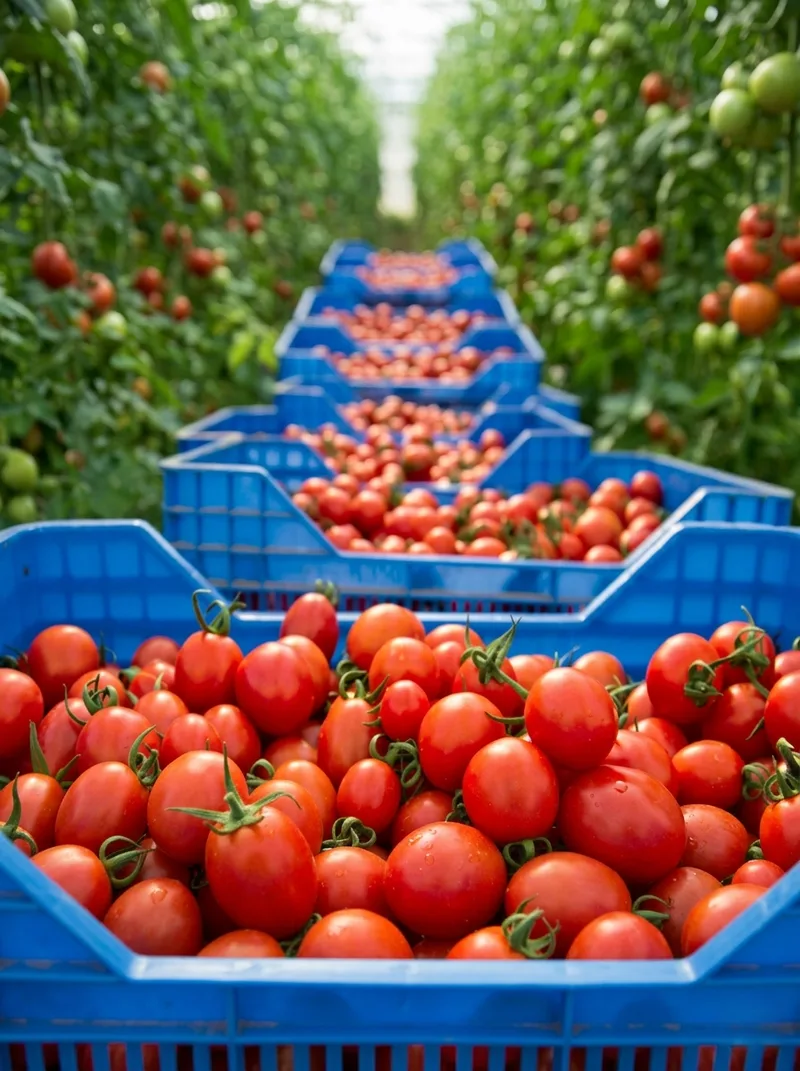
Tomato
All over India
peak in December to March, which keeps prices lower during these months. Major production follows a two-season cycle: winter (sown June-July) and summer (sown November-February). Peak demand-driven price hikes usually occur between July and November.
Sourced from all over India, Tomato hails in a wide variety of shapes and colors. For that tangy taste in a multitude of cuisines, tomato is considered indispensable.
Why Indian?
Considered indispensable for tangy taste in multitude of cuisines
Benefits
Base for curries and gravies, essential for sauces and chutneys
Uses & Applications
Tomatoes are a fundamental, daily staple in Indian cuisine and a significant commercial crop, with roughly 80% consumed fresh and 20% processed. They are used for their ability to provide a tangy, umami-rich base for countless dishes
Characteristics
Health & Nutrition
Nutritional Value
Indian tomatoes (desi tamatar) are low-calorie (18 kcal/100g) and highly nutritious, containing 95% water, 3.9g carbs, 1.2g fiber, and 0.2g fat. They are excellent sources of Vitamin C (around 28% DV), Vitamin A (21% DV), Vitamin K (13% DV), potassium, and potent antioxidants like lycopene, which support heart health and immunity.
Medicinal Properties
Indian tomatoes are rich in lycopene, Vitamin C, and potassium, offering significant medicinal value, including strong antioxidant properties that boost immunity, improve heart health, and lower cancer risks. They promote skin health, support vision, strengthen bones, and improve digestion, making them a vital dietary component in India
Varieties
India boasts over 1,000 tomato varieties, featuring popular hybrids like Rupali, Arka Shrestha, and Abhinav for high yield and disease resistance. Key, widely cultivated types include Pusa Ruby, Pusa Early Dwarf, and Arka Vikas, which are well-suited for diverse Indian climatic conditions, ranging from hot summers to winter, and are used extensively for cooking and processing.
Packaging
Indian tomato exports primarily utilize sturdy corrugated fiberboard (CFB) boxes, typically 5 to 7 ply, designed for ventilation and durability during transit. Common packaging includes 20 kg printed cartons, plastic crates for, and specialized crates for 7kg green tomatoes
Safety Information
Exporting tomatoes from India requires strict adherence to quality, safety, and phytosanitary standards to ensure the product remains fresh and compliant with international regulations. The key aspects focus on reducing pesticide residue, maintaining the cold chain, and obtaining necessary certifications
Trust & Quality
Related Products
Green Chilli
📍 All over India
Green Chilli is another staple of Indian culinary gamut. After grasses, chilli peppers are perhaps the most diversified organic item with many varieties.
Lemon
📍 India
Indian Limes for export Indian lime (citrus) for export, primarily Citrus aurantifolia, is recognized for being 100% fresh, organic, and rich in Vitamin C, with a vibrant green color. Sourced largely from regions like Tamil Nadu, these limes are handpicked, washed, and packed using refrigerated, climate-controlled logistics for international markets like the UAE, UK, and Bangladesh
Okra (Lady's Fingers)
📍 Tropical and warm regions of India
Sourced from the tropical and warm regions of Indian, Okra is a perennial vegetable of immense popularity in India. Its fibrous roots and pods containing round white seeds transform into thick glutinous slime when cooked. India is the world's largest producer of okra (bhindi/ladyfinger), contributing over 60-70% of global production. In 2023, India's production was 7.158 million metric tons. India is also a leading global exporter of fresh okra, with significant shipments to the UK, Kuwait, and Germany etc