Home/Products/Black Pepper
Back to Products

Premium Quality Product

India is typically the third or fourth largest producer of black pepper globally, consistently trailing Vietnam, Indonesia, and sometimes Brazil. While being a major producer (often contributing 7–10% of global output), India is also a significant consumer and importer, ranking high for quality with varieties like Malabar and Tellicherry
Rice & SpicesSpices

Black Pepper

Origin

indian

Season

The Indian black pepper harvest season primarily runs from December to March, with peak harvesting activity occurring between January and February. In Kerala and other southern plains, harvesting often starts earlier in November, while high-altitude regions (hills) are harvested later, stretching into March

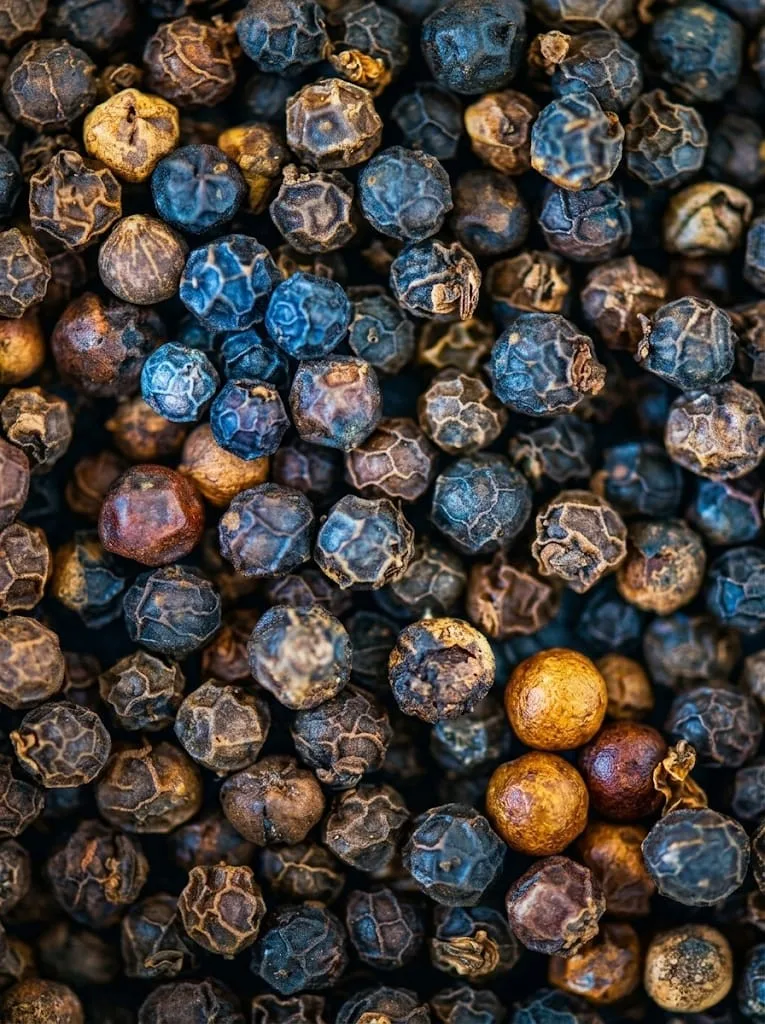
Indian black pepper (Piper nigrum) is a premium, pungent spice derived from the dried, unripe berries of a climbing vine, primarily cultivated in the humid tropical regions of Kerala, Karnataka, and Tamil Nadu. Known as "King of Spices," it features a wrinkled, black, 5mm skin with a strong aroma due to high essential oil content.

Why Indian?

Indian black pepper (Kali Mirch), often referred to as the "king of spices," is a highly valued, nutrient-rich spice with deep roots in Ayurvedic medicine. It is used for its intense, pungent flavor and numerous health benefits, primary among them being the ability to increase the bioavailability of nutrients—especially when paired with turmeric

Request Quote

Uses & Applications

Indian black pepper (Piper nigrum), or "Kali Mirch," is renowned for its high piperine content, offering significant health benefits, including enhanced digestion, improved nutrient absorption, and potent anti-inflammatory and antioxidant effects. It boosts metabolism, aids in weight management, supports immune function, and helps manage respiratory issues

Characteristics

Texture:Indian black pepper (Kali Mirch) features a hard,, wrinkled, and rough-surfaced texture due to sun-drying, with a brownish-black exterior. These small, spherical berries are very firm to the touch, often requiring significant force to grind, and possess a light-colored, dense inner seed
Appearance:Indian black pepper (specifically Malabar or Tellicherry varieties) consists of small, 5mm, spherical berries that are deeply wrinkled, dark brown to black, and possess a heavy, solid feel. These dried, unripe drupes have a robust, pungent, earthy aroma and a pungent, woody, and slightly citrusy flavour
Flavor:Indian black pepper, known as Kali Mirch, is characterized by a bold, sharp, pungent heat and a deep, aromatic, piney, and woody flavor. It acts as a warm, aromatic, and intense seasoning, widely used in Indian cuisine for its depth, often described as having a strong, earthy aroma

Health & Nutrition

Nutritional Value

Indian black pepper (Kali Mirch) is a nutrient-dense spice, primarily known for containing piperine, which aids digestion and nutrient absorption. One teaspoon (approx. 2.3g) contains roughly 5–6 calories, 0.2g protein, 0.1g fat, and 1.5g carbohydrates, with significant manganese, vitamin K, and iron content

Medicinal Properties

Indian black pepper (Piper nigrum), known as "king of spices," is rich in the compound piperine, which boosts metabolism, aids digestion, and enhances nutrient absorption (especially curcumin from turmeric). It possesses significant antioxidant, anti-inflammatory, and antimicrobial properties, helping to combat colds, improve cognitive function, and manage chronic diseases

Cultural Significance

Indian black pepper, known as the "king of spices" and originating from Kerala's Malabar Coast, holds deep cultural significance as a foundational ingredient in Indian cuisine, a cornerstone of traditional Ayurvedic medicine, and a historical driver of global commerce. Known as marich in Sanskrit, it represents millennia of culinary, medicinal, and economic history.

Specifications

Length0

Packaging

Indian black pepper export packaging emphasizes moisture protection and aroma retention using food-grade materials, primarily 25-50 kg jute bags with inner liners, multi-layer laminated bags, and vacuum sealing for high-end, food-safe transport. Key grades like Tellicherry Garbled (TGEB) are exported with strict moisture control (<12-13%).

Safety Information

Indian black pepper (Kali Mirch) is generally safe for daily consumption in moderate, culinary amounts (approx. 1/4 to 1/2 teaspoon daily). It is widely considered safe, but excessive, medicinal-level consumption can cause health issues, particularly for individuals with pre-existing conditions.

Additional Information

Contact company for detailed information

Trust & Quality

100% Authentic
Premium Quality
Global Export
Natural Source

Product Specifications

General Specifications

Storage TemperatureIndian black pepper is best stored in a cool, dry, and well-ventilated area, ideally at temperatures below 25°C (77°F), although it can tolerate ambient temperatures if stored properly. Maintaining a consistent, cool, and dry environment is critical to preventing mold, self-heating, and loss of essential oils.

Grading & Sizing

Grade AIndian black pepper grades are primarily classified by size, density, and processing (garbled or ungarbled), with top grades including TGSEB (Tellicherry Garbled Special Extra Bold), TGEB (Tellicherry Garbled Extra Bold), and MG-1 (Malabar Garbled Grade 1). Key factors are bulk density (GL - Grams/Litre) and berry size
Grade BTGSEB (Tellicherry Garbled Special Extra Bold): Highest grade; boldest berries ( mm) with superior aroma, typically 550-600+ GL. TGEB (Tellicherry Garbled Extra Bold): Large berries ( mm), premium culinary grade. TG (Tellicherry Garbled): High-quality garbled pepper, smaller than TGEB. MG-I (Malabar Garbled Grade I): Standard premium grade; bold berries ( mm to mm) with high pungency and aroma. MG-II (Malabar Garbled Grade II): Slightly smaller berries than MG-I, good quality. MUG-I & MUG-II (Malabar Ungarbled): Ungarbled (not machine-cleaned) grades containing mixed sizes and impurities.

Packaging Details

MaterialIndian black pepper is packed using moisture-resistant, food-grade materials to preserve aroma and prevent quality loss. Common materials include multi-layered laminated plastic pouches (PET/MET/POLY), LDPE pouches, jute bags for bulk shipments, PP woven sacks, and paper boxes for retail, featuring resealable zippers and vacuum packing for premium, long-term storage.
Box SizesIndian black pepper is packed in various box sizes, ranging from small retail boxes (50g–500g) to large bulk containers. Common paper box sizes include for small quantities, and for retail, . Bulk and export, however, typically use to woven or jute bags

Shipping Information

40ft Container LoadabilityIndian black pepper packing loadability varies based on the container size, with a standard 20ft container holding approximately 12 to 18 metric tons (MT) and a 40ft container holding roughly 22 to 28 MT. The typical packaging includes 25kg or 50kg PP (polypropylene) bags, jute bags with liners, or vacuum-sealed packs to preserve freshness

Related Products

Cumin Seeds

📍 Cumin seeds are the dried fruit of Cuminum cyminum, an annual herb in the parsley family native to the Levant and Eastern Mediterranean. Today, they are primarily cultivated in arid, hot climates, with India producing roughly 70%–90% of the world's supply, particularly in the Gujarat and Rajasthan regions

Cumin seeds (Cuminum cyminum) are small, elongated, yellowish-brown dried fruits (schizocarps) with 5-9 prominent longitudinal ridges and a pungent, warm, earthy flavor. As a staple spice in Indian, Middle Eastern, and Mexican cuisines, they are used whole or ground, often featuring in curry powders, stews, and soups.

Mustard Seeds

📍 india

Mustard seeds are small, pungent, round seeds from the Brassica plant family (related to broccoli and cabbage), widely used as a spice and for producing vegetable oil. Available in yellow, brown, and black varieties, they offer a sharp, tangy flavor and are commonly used in tempering (tadka) for Indian dishes or in making condiments.

Clove Pods (Lavangam)

📍 Cloves (Syzygium aromaticum) are not originally native to India, but rather to the Molucca Islands (Spice Islands) of Indonesia. They were introduced to India around 1800 A.D. by the East India Company, which established early clove cultivation in Courtallam, Tamil Nadu

Indian clove is the aromatic, air-dried,, unopened flower bud of the Syzygium aromaticum tree, widely cultivated in Southern India (Tamil Nadu/Kerala). It is characterized by a dark brown, nail-like shape, strong, pungent, sweet, and hot flavor, and high oil content (primarily eugenol). It is essential in Indian cuisine, Ayurveda, and for its antiseptic/numbing properties.