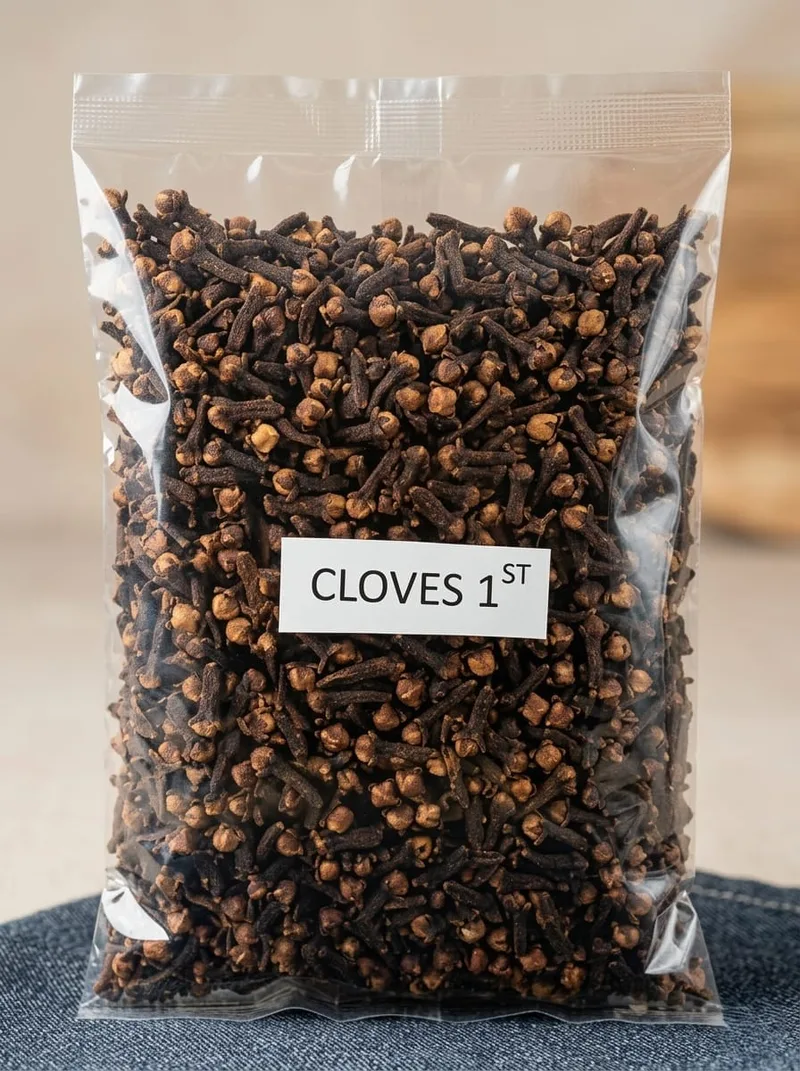
Clove Pods (Lavangam)
Cloves (Syzygium aromaticum) are not originally native to India, but rather to the Molucca Islands (Spice Islands) of Indonesia. They were introduced to India around 1800 A.D. by the East India Company, which established early clove cultivation in Courtallam, Tamil Nadu
Indian clove harvesting season typically occurs between September and February, with peak activity often falling in December and January. Harvesting timing varies by altitude, starting earlier in the plains and later in higher regions
Indian clove is the aromatic, air-dried,, unopened flower bud of the Syzygium aromaticum tree, widely cultivated in Southern India (Tamil Nadu/Kerala). It is characterized by a dark brown, nail-like shape, strong, pungent, sweet, and hot flavor, and high oil content (primarily eugenol). It is essential in Indian cuisine, Ayurveda, and for its antiseptic/numbing properties.
Why Indian?
Toothache and Oral Hygiene: Due to the numbing and antiseptic properties of eugenol, placing a whole clove near a painful tooth, or using clove oil diluted with a carrier oil, can relieve toothache and reduce gum inflammation. Chewing one or two cloves helps eliminate odor-causing bacteria and freshens breath. Digestion Aid: Chewing a clove after meals or drinking warm water with a crushed clove can reduce gas, bloating, and indigestion. Cold and Respiratory Relief: Because of their "warming" nature, cloves are used to clear congestion and soothe sore throats. They can be chewed with salt to reduce throat irritation.
Uses & Applications
Indian cloves (laung) offer potent health benefits, primarily driven by the compound eugenol, which acts as a powerful antioxidant, anti-inflammatory, and antimicrobial agent. Key benefits include improved digestion, enhanced oral health (reducing toothaches/bad breath), immune system support, and blood sugar control.
Characteristics
Health & Nutrition
Nutritional Value
Indian cloves (laung) are highly nutritious, aromatic spice buds packed with antioxidants, specifically eugenol. Per 100g, they provide roughly 274–323 kcal, 60-66g carbohydrates, 6g protein, and 13-20g fat. They are exceptionally high in dietary fiber (~34g) and minerals like manganese, calcium, and iron, essential for bone health and metabolism.
Medicinal Properties
Cloves: Health benefits and usesIndian clove (laung) is a potent Ayurvedic medicinal spice rich in eugenol, offering powerful anti-inflammatory, antiseptic, and antimicrobial properties. Primarily used for instant toothache relief and gum infections, it also aids digestion, reduces bloating, fights respiratory issues like coughs, and regulates blood sugar levels
Specifications
Packaging
Indian clove packages (Laung) are available in varied sizes ranging from small 10g-50g consumer packs for household use to 1kg-50kg bulk bags for commercial purposes. These are typically packed as high-quality, whole, dark brown dried buds, often sourced from Kerala. Common packaging includes plastic bags, pouches, or wholesale PP bags
Safety Information
Indian cloves (laung) are widely used in culinary and medicinal applications, generally recognized as safe (GRAS) in small culinary amounts. However, due to their high concentration of the active compound eugenol, they can pose significant health risks if misused, particularly in oil or supplement form
Trust & Quality
Related Products
Cumin Seeds
📍 Cumin seeds are primarily cultivated in arid, hot climates, with India producing roughly 70%–90% of the world's supply, particularly in the Gujarat and Rajasthan regions
Cumin seeds (Cuminum cyminum) are small, elongated, yellowish-brown dried fruits (schizocarps) with 5-9 prominent longitudinal ridges and a pungent, warm, earthy flavor. As a staple spice in Indian, Middle Eastern, and Mexican cuisines, they are used whole or ground, often featuring in curry powders, stews, and soups.
Mustard Seeds
📍 india
Mustard seeds are small, pungent, round seeds from the Brassica plant family (related to broccoli and cabbage), widely used as a spice and for producing vegetable oil. Available in yellow, brown, and black varieties, they offer a sharp, tangy flavor and are commonly used in tempering (tadka) for Indian dishes or in making condiments.
Black Pepper
📍 indian
Indian black pepper (Piper nigrum) is a premium, pungent spice derived from the dried, unripe berries of a climbing vine, primarily cultivated in the humid tropical regions of Kerala, Karnataka, and Tamil Nadu. Known as "King of Spices," it features a wrinkled, black, 5mm skin with a strong aroma due to high essential oil content.