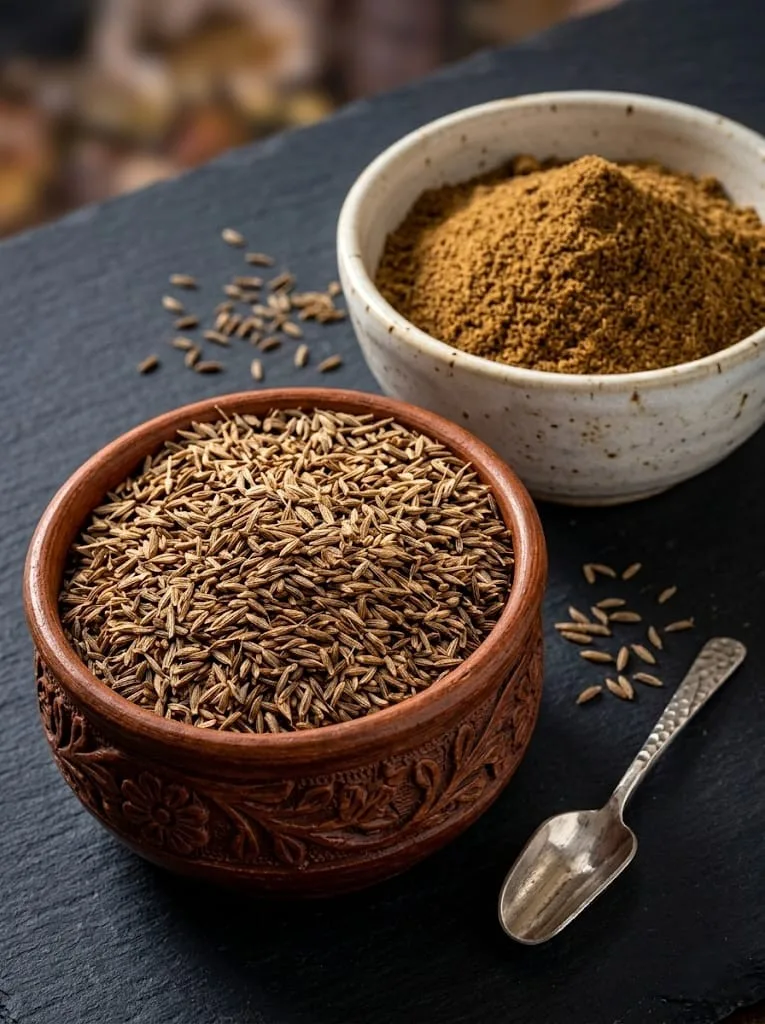
Cumin Seeds
Cumin seeds are primarily cultivated in arid, hot climates, with India producing roughly 70%–90% of the world's supply, particularly in the Gujarat and Rajasthan regions
Cumin seeds (Cuminum cyminum) are small, elongated, yellowish-brown dried fruits (schizocarps) with 5-9 prominent longitudinal ridges and a pungent, warm, earthy flavor. As a staple spice in Indian, Middle Eastern, and Mexican cuisines, they are used whole or ground, often featuring in curry powders, stews, and soups.
Benefits
Cumin seeds (jeera) offer significant health benefits, primarily promoting digestion by increasing enzyme activity and reducing bloating. They are rich in iron, antioxidants, and compounds that aid in blood sugar control, weight management, and lowering bad cholesterol. They are also known for boosting immunity, providing anti-inflammatory effects, and supporting heart health.
Uses & Applications
Culinary Applications: Tempering (Tadka/Chhonk): Whole seeds are roasted in oil or ghee to release essential oils, commonly used in Indian dal and vegetable dishes. Spice Blends: A core ingredient in curry powder, garam masala, and taco seasoning. Flavoring Agent: Added to soups, stews, pickles, bread, and yogurt for a warm, earthy taste.
Characteristics
Health & Nutrition
Nutritional Value
Cumin seeds are a highly nutrient-dense spice, offering significant amounts of iron, calcium, magnesium, and dietary fiber per 100g, while providing 375 kcal, of protein and they are exceptionally rich in antioxidants (terpenes, phenols, flavonoids) that fight inflammation. Key benefits include aiding digestion and potentially managing diabetes
Medicinal Properties
Cumin seeds were also found to have potential benefits for weight loss, skin health, digestive health, blood sugar control, and anti-cancer activity. Cumin seeds contain vitamins A and C, both of which are important for a healthy immune system.
Specifications
Packaging
Cumin seeds for export are typically packed in 25–50 kg moisture-proof polypropylene (PP) bags, jute bags, or, for premium grades, vacuum-packed pouches to ensure quality, aroma retention, and long shelf life. Packaging must comply with international food safety standards, including clear labeling of product, grade, net weight, country of origin, batch number, and, if required,, sterilization details
Safety Information
Cumin seeds are generally safe in cooking amounts but may cause side effects like stomach pain or reduced testosterone in high, medicinal doses. Key precautions include avoiding large amounts during pregnancy, stopping use two weeks before surgery due to blood sugar/clotting effects, and monitoring for allergic reactions.
Trust & Quality
Related Products
Mustard Seeds
📍 india
Mustard seeds are small, pungent, round seeds from the Brassica plant family (related to broccoli and cabbage), widely used as a spice and for producing vegetable oil. Available in yellow, brown, and black varieties, they offer a sharp, tangy flavor and are commonly used in tempering (tadka) for Indian dishes or in making condiments.
Clove Pods (Lavangam)
📍 Cloves (Syzygium aromaticum) are not originally native to India, but rather to the Molucca Islands (Spice Islands) of Indonesia. They were introduced to India around 1800 A.D. by the East India Company, which established early clove cultivation in Courtallam, Tamil Nadu
Indian clove is the aromatic, air-dried,, unopened flower bud of the Syzygium aromaticum tree, widely cultivated in Southern India (Tamil Nadu/Kerala). It is characterized by a dark brown, nail-like shape, strong, pungent, sweet, and hot flavor, and high oil content (primarily eugenol). It is essential in Indian cuisine, Ayurveda, and for its antiseptic/numbing properties.
Black Pepper
📍 indian
Indian black pepper (Piper nigrum) is a premium, pungent spice derived from the dried, unripe berries of a climbing vine, primarily cultivated in the humid tropical regions of Kerala, Karnataka, and Tamil Nadu. Known as "King of Spices," it features a wrinkled, black, 5mm skin with a strong aroma due to high essential oil content.