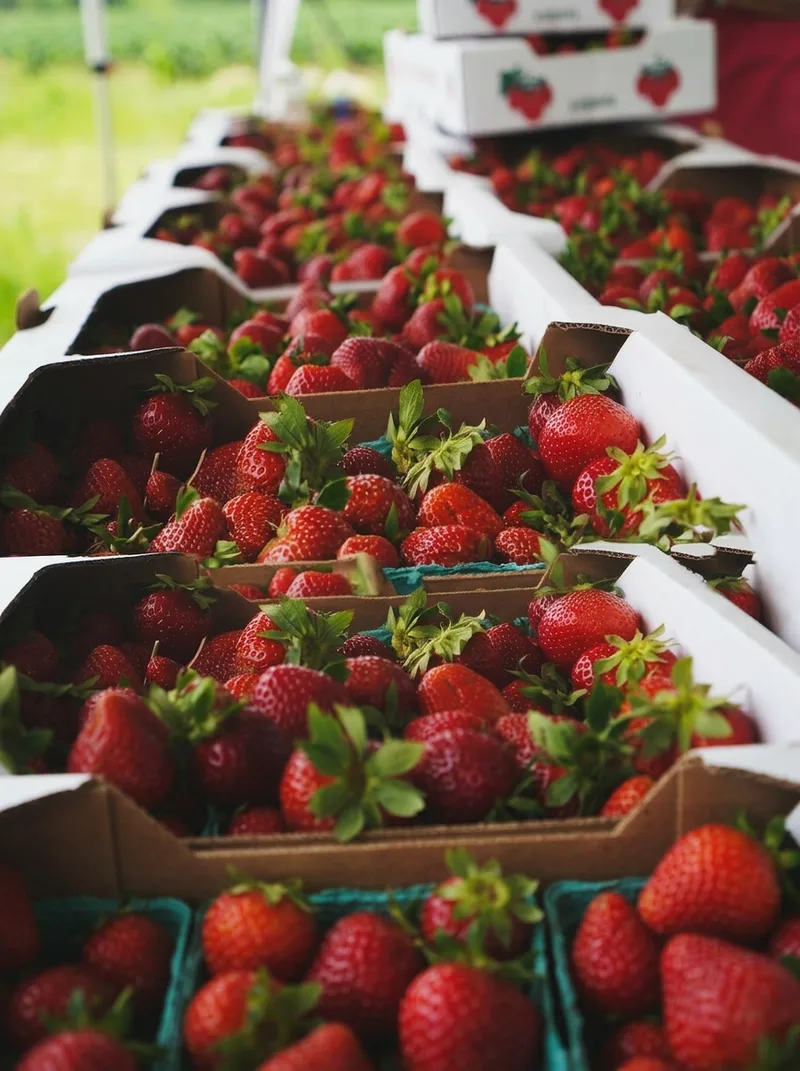
Strawberry
india
Strawberry season in India typically runs from late November to March, with the peak season lasting from December to February.
The strawberry is a widely cultivated, heart-shaped, bright red, aggregate accessory fruit known for its sweet aroma, juicy texture, and white flesh. It is not a true berry, but rather a member of the rose family, featuring roughly 200 tiny seeds called achenes on its exterior. Strawberries are rich in Vitamin C, iron, and antioxidants, and are typically eaten fresh, in desserts, or as preserves.
Why Indian?
Indian strawberries, primarily cultivated in regions like Mahabaleshwar, are chosen for their vibrant color, juicy texture, and, most importantly, their intense sweet-tangy flavor profile. Available mostly from December to June, these berries are a fresh, nutrient-dense, and highly sought-after seasonal delicacy, often benefiting from cold nights that enhance their natural sugar content.
Benefits
Indian strawberries are edible wild berries rich in antioxidants, vitamins, and fiber. They offer medicinal benefits, including anti-inflammatory, antiseptic, and anticoagulant properties, traditionally used to aid digestion, boost immunity, and treat skin issues
Uses & Applications
Indian strawberries are edible wild berries rich in antioxidants, vitamins, and fiber. They offer medicinal benefits, including anti-inflammatory, antiseptic, and anticoagulant properties, traditionally used to aid digestion, boost immunity, and treat skin issues
Characteristics
Health & Nutrition
Nutritional Value
Indian strawberries (Potentilla indica), also known as mock or false strawberries, are low-calorie wild fruits, containing roughly 32-46 kcal, ~7.7g carbohydrates, and 1-2g fiber per 100g. They are highly nutritious, providing significant Vitamin C, along with iron, protein, and powerful antioxidants like anthocyanins
Medicinal Properties
Indian Strawberry (Potentilla indica), often mistaken for poisonous, is a non-toxic, edible, and medicinal plant rich in vitamin C and antioxidants. Its entire structure—fruits, leaves, and roots—is used for anti-inflammatory, antiseptic, and antibacterial properties, particularly in treating skin conditions (eczema, burns), oral infections, and fever
Varieties
Popular strawberry varieties in India, primarily cultivated in Mahabaleshwar (Maharashtra), Himachal Pradesh, and West Bengal, include Chandler, Sweet Charlie, Camarosa, Winter Dawn, and Selva. These varieties are selected for their adaptability to subtropical climates, high yield,, and firm texture, with harvesting taking place mainly between February and March
Specifications
Safety Information
Thorough Cleaning: Wash berries under running water while rubbing gently. Avoid using soap, detergents, or special washes. Storage: Store in the refrigerator to maintain freshness and safety. Consumption for Babies: Strawberries can be introduced to babies (6+ months) but may cause rashes due to their acidic nature. Pesticide Awareness: Due to potential residues, ensure they are washed properly, as they are often grown using pesticides in some agricultural practices.
Trust & Quality
Related Products
Alphonso Mango
📍 Maharashtra,Karnataka (Western India) and also andhra pradesh
India ranks First in the world for the mango production which accounts for 56% of the world's mango production known as 'King of fruits'. Alphonso Mango sourced from premium Maharashtra farms & Karnataka farms, Alphonso mangoes are a delight for senses. The Indian Alphonso mango, often called the "King of Mangoes," is widely regarded as the best, tastiest, and most premium mango variety in the world, renowned for its rich and sweet flavor
Kesar Mango
📍 Gujarat and Maharashtra (western India)
India ranks First in the world for the mango production which accounts for 56% of the world's mango production. Kesar Mango sourced from the state of Gujarat & Maharashtra in western India, Kesar mangoes swank a burnishing bright-yellow pulp.
Watermelon
📍 south and north
Watermelon (Citrullus lanatus) is a large,92% water-content berry (pepo) with a thick, green-striped, or mottled rind and, typically, sweet, red, juicy flesh with small black seeds. Known for its refreshing, sweet taste, it is a popular summer fruit that is rich in vitamins A and C, potassium, and the antioxidant lycopene