Home/Products/Watermelon
Back to Products
Watermelon preview 1
India is the third-largest producer of watermelon globally, producing approximately 2.9 to 3.5 million metric tonnes annually. The country is a significant player in the market, with Uttar Pradesh, Andhra Pradesh, Tamil Nadu, Karnataka, and Rajasthan being the major production states
Fruits

Watermelon

Origin

south and north

Season

March to end of July

Watermelon (Citrullus lanatus) is a large,92% water-content berry (pepo) with a thick, green-striped, or mottled rind and, typically, sweet, red, juicy flesh with small black seeds. Known for its refreshing, sweet taste, it is a popular summer fruit that is rich in vitamins A and C, potassium, and the antioxidant lycopene

Why Indian?

Indian watermelons are a popular, nutrient-dense summer fruit cultivated across states like Maharashtra, Karnataka, and Rajasthan. Known for being over 90% water and packed with vitamins A, C, and potassium, these fruits range from small, compact varieties to larger, striped, and oval-shaped types. Common types include the sweet, thin-rinded Kiran

Request Quote

Benefits

Intense Hydration & Cooling: With 92% water content, it replenishes fluids, reduces heat-related fatigue, and helps manage summer sunburns. Heart Health & Blood Flow: Rich in citrulline, which improves blood circulation, and lycopene, which reduces cholesterol and cardiovascular risk. Nutrient-Dense & Low Calorie: Packed with Vitamins A, C, and magnesium, it is ideal for weight loss as it keeps you full, reducing the urge to overeat. Skin & Hair Care: High in Vitamin C, it promotes collagen production, improving skin elasticity and hair strength. Digestion: The combination of water and fiber helps regulate bowel movements and prevents constipation. Muscle Recovery: Citrulline in watermelon helps reduce muscle soreness after exercise.

Uses & Applications

It's frontloaded with essential nutrients. ... 2) It offers a big dose of lycopene. ... 3) Watermelon helps keeps you hydrated. ... 4) It adds to healthy digestion. ... 5) It could help with weight management. ... 6) It may improve heart health. ... 7) It could work to reduce cancer risk.

Characteristics

Texture:A perfectly ripe watermelon has a crisp, firm, and juicy, yet slightly fibrous, flesh, often described as crunchy. The inner texture is dense and succulent, with a vibrant red or pink color, surrounding smooth, dark, or white seeds. The outer rind is thick, smooth, and firm to the touch
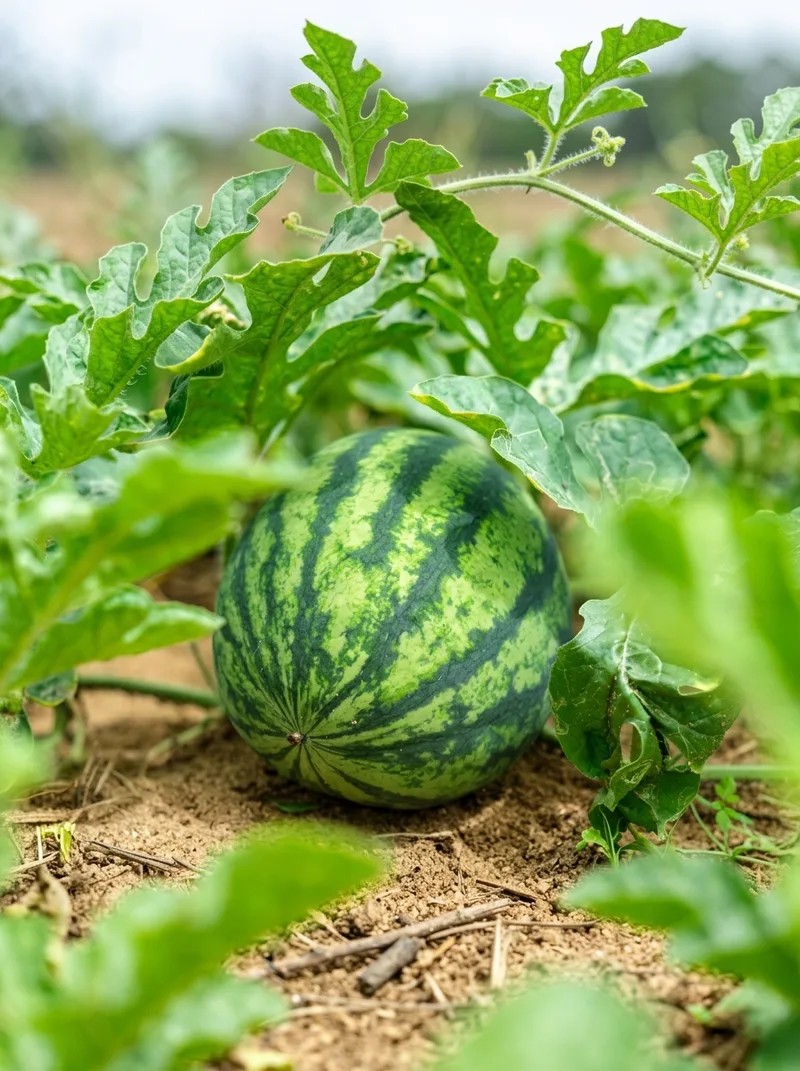
Appearance:A ripe watermelon has a hard, dull, matte-finish rind, typically with dark green, clear stripes and a creamy, deep-yellow or orange "field spot" underneath. It feels heavy for its size, possesses a small, dried, brown, or curly stem/navel, and produces a deep, hollow sound when tapped. The flesh inside is usually vibrant red or pink (sometimes yellow or orange) with dark seeds or, in seedless varieties, small, soft, white, undeveloped seeds

Health & Nutrition

Nutritional Value

46 calories. 12 grams of carbohydrates. 865 international units (IU) of vitamin A — (equates to . 26 milligrams) 12 milligrams of vitamin C. 170 milligrams of potassium. 0.1 milligrams of vitamin B6. Zero fat, cholesterol or sodium.

Medicinal Properties

Watermelon is also rich in potassium, which works to lower blood pressure and supports nerve functioning, and vitamin B6, which helps the body break down the proteins that you eat and also boosts the immune system and nerve function.

Varieties

Types & Availability - Watermelon BoardMedicinal watermelon varieties focus on high nutrient density, particularly antioxidants, lycopene, and citrulline for cardiovascular, immune, and anti-inflammatory benefits. Key medicinal types include 'Sugar Baby' (high -carotene)'Summer Orange' (high antioxidant)'Kaolack' (high Vitamin C/E), and 'Collos F1' (high Vitamin A in rind

Specifications

WeightThe average weight of a standard watermelon typically ranges between 4 and 10 kg (approx. 9 to 22 lbs). While smaller varieties or "icebox" melons exist, commercial, full-sized watermelons commonly found in markets often weigh around 8-10 kg.
Length0

Packaging

The four main types of packaging, categorized by their role in the supply chain, are Primary (direct product contact, e.g., bottle), Secondary (groups primary packages, e.g., multipack box), Tertiary (bulk shipping, e.g., pallet wrap), and sometimes Quaternary (large-scale logistics), working together to protect products from creation to consumer.

Additional Information

For the first watermelon harvest and packing method, the watermelons are harvested and placed on the packing table of the harvesting rig. The packers then place the watermelons into the boxes, or into bags and then boxes

Trust & Quality

100% Authentic
Premium Quality
Global Export
Natural Source

Product Specifications

General Specifications

MaturityWatermelons are mature 75–100 days after planting (35–40 days post-pollination), signaled by a yellowed "belly" spot, brown/withered tendrils near the stem, and a dull, hollow sound when tapped. The rind should feel hard and the green color often turns slightly dull
Storage TemperatureWatermelon cold storage requires temperatures of 10 to 15d with 85-90% relative humidity to maintain quality for up to 3 weeks. While they can be stored at room temperature (<75f) ) for 7-10 days, industrial or long-term storage is best managed between (10 to 14 deg celcius ) to prevent chilling injury
SizeMini/Personal Watermelon: These are highly popular, weighing between 1 and 7 pounds (approx. 0.5–3 kg). They are designed to fit easily in the refrigerator and are often sold as individual servings (e.g.fresho! small, 1.25–2 kg). Icebox Watermelon: Smaller than picnic varieties, these are designed to fit in a standard refrigerator (e.g., 2.5–3.5 kg varieties). Large/Picnic Watermelon: These range from 15 to 45 pounds (approx. 7–20 kg) and are designed for crowds. Some commercial varieties can reach 5–10 kg. Jumbo/Giant Watermelon: These can weigh over 100 pounds, with the record-breaking 'Carolina Cross' variety often reaching 65 to 150 pounds. Square Watermelon: A Japanese innovation, these are grown inside glass boxes, creating a 3-inch cube for easy storage and, often, for aesthetic, expensive display.

Packaging Details

MaterialWatermelon packaging for export requires durable, ventilated materials to prevent rot and damage, typically using corrugated cardboard boxes, mesh bags, or specialized cushioned containers. Common methods include 2-ply printed cardboard boxes, mesh bags (12–20 kg), and ventilated wooden crates on pallets. Key protection involves soft padding and proper stacking to prevent damage during long-distance shipping.
Box SizesCorrugated Cartons: Strong, ventilated boxes (often 2-ply) are ideal for protecting against pressure and bruising. Mesh Bags: Commonly used to securely hold watermelons, allowing for airflow. Airofill Bags: Inflatable packaging bags are used to securely cushion melons, often placed inside corrugated boxes to reduce damage. Wooden Crates: Used for structural support, but often require padding like straw to prevent bruising
Pack TypesVentilation: Essential for maintaining fruit freshness and preventing rot. Padding: Using shredded paper or foam to prevent impact damage during transit. Palletization: Securing containers on wooden pallets for efficient handling. Labeling: Including product name, origin, weight, and handling instructions for compliance. Capacity: Typical bulk shipments use 40-foot containers filled with mesh bags or boxes. Common Packing Material: Ventilated Boxes: 24 x 14 x 12 inch cartons are commonly used, with weight capacities around 15 kg. Pallets: 20 pallets per container, with each pallet weighing roughly 1100 kg, is a standard setup

Shipping Information

40ft Container LoadabilityWatermelon export requires careful loadability planning to maintain fruit quality, with a standard 20-ton (20,000 kg) to 25-ton capacity per 40ft reefer container. To maximize loadability while protecting the fruit, watermelons should be transported at 8-10°C with 85-90% relative humidity, avoiding temperatures below 7°C to prevent chilling injury